
|
Getting your Trinity Audio player ready...
|
You’d think organising Italy’s most-watched TV event would be a no-brainer. But the Sanremo Festival—Italy’s glitzy, melodramatic song contest that (kind of) doubles as the nation’s Eurovision selection—has found itself in a bit of a bind.
Following a recent court ruling that found the direct award of the municipality’s festival-related rights and trademarks to RAI unlawful, Sanremo opened the 2026–2028 editions to a public procedure. RAI then found itself as both the organiser and the only one interested in organising. Yes, dear reader, in the great bake-off of festival tenders, only one soggy bottom turned up.
Crying foul

This all kicked off thanks to Sergio Cerruti, a music producer and president of an Italian independent labels group, who challenged Sanremo being handed to RAI without an open process. The Liguria Regional Administrative Court (TAR) agreed with him in December 2024, requiring the Municipality of Sanremo to open the organisation and free-to-air broadcast of the festival to a public procedure.
So they did. And… drumroll… the only formal expression of interest came from (you guessed it) RAI.
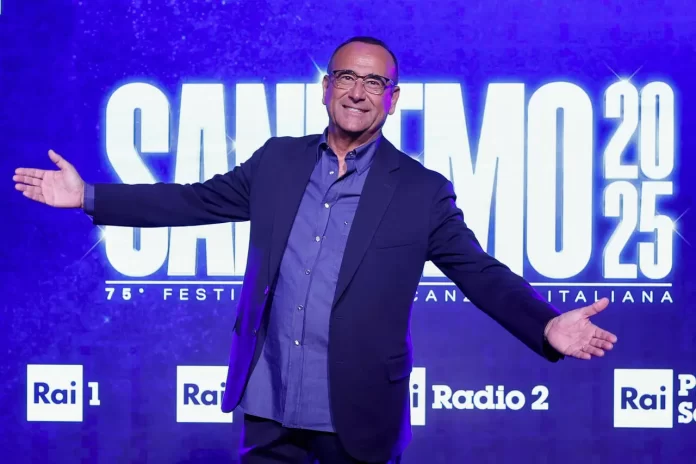
To be fair, RAI is Sanremo. And with Carlo Conti—yes, he’s back—taking the reins once more, the broadcaster clearly isn’t ready to let go of its crown jewel. Speaking to ANSA, Conti was characteristically diplomatic: “RAI cannot do without the Festival, and Sanremo cannot do without RAI.”
But Cerruti’s challenge remains alive. The legal argument is about the municipality’s festival-related rights and trademarks, rather than whether RAI could technically broadcast a programme used to select Italy’s Eurovision entry. That distinction matters, even if it makes the whole thing considerably less fun to explain over coffee.
But here’s where things get spicy
On 22 May, Italy’s Council of State is due to hear RAI and the Municipality’s appeal against the TAR’s ruling. On 4 April, it refused to suspend that ruling while the appeal was pending, noting that the substantive hearing was already scheduled.
The following day, 23 May, a separate TAR proceeding will consider Cerruti’s request for an interim suspension of the Municipality’s tender-related resolution. So, despite the similar subject matter, this is not the same court hearing twice in two days—a small mercy for anyone trying to keep track.
Why does this matter for Eurovision fans? Because Sanremo has commonly supplied Italy’s Eurovision act, although that connection is governed by RAI’s annual Sanremo rules rather than by this court case itself. If the festival’s organiser or selection arrangements changed, the normal route to Eurovision could have been affected. But as of 20 May 2025, no such change had been decided, and Italy’s participation had not been cancelled.
For now, Italy’s Eurovision hopes remain tethered to Sanremo’s fate—and to whether RAI gets to keep the glittery keys to the kingdom. RAI being the sole applicant does not, by itself, mean that it has already secured the contract.
Archive note: The Council of State hearing did take place on 22 May 2025, but the decision was not delivered immediately. The court later rejected the appeals by RAI, RAI Pubblicità and the Municipality in a disposition published on 29 May, leaving the requirement for a public procedure in place. The separate 23 May TAR proceeding concerned the interim request over the Municipality’s tender resolution.
In a later development, the uncertainty did not ultimately remove Sanremo from RAI. RAI and the Municipality reached an agreement in early September 2025, keeping the Festival in Sanremo for 2026–2028, with a possible extension through 2030; RAI’s board approved the convention on 18 September.
Watch this space. And spare a thought for the poor clerks in Liguria who thought they were just booking a theatre.