
ESC stands for the Eurovision Song Contest, the annual live music competition organised by the European Broadcasting Union (EBU). Each year, around 40 public broadcasters enter a song and artist to represent them, all hoping to survive the Semi-Finals and win the Grand Final. Strictly speaking, Eurovision is a contest between broadcasters rather than countries, even if we all talk about it as a battle of nations.
Every participating broadcaster selects one original song. Eurovision songs must be no longer than three minutes, can feature up to six performers on stage, and are performed live in a format built around two Semi-Finals and one Grand Final. It is one of the biggest annual live TV events in the world, which is why Eurovision fans can make it sound both gloriously chaotic and weirdly complicated at the same time.
Why are Israel, Australia, Azerbaijan and other non-European countries in Eurovision?
This is one of the most common Eurovision questions. The short answer is that Eurovision participation is not based on a simple map test. It is based on broadcaster eligibility through the EBU. Members of the EBU can take part, and in exceptional cases the Contest can also include specially invited Associate broadcasters. That is why countries that are not fully or neatly “in Europe” can still appear in the competition.
Australia is the best-known example. The Contest has been broadcast there for decades, and Australian broadcaster SBS was invited in 2015. Since then, Australia has remained part of the Eurovision mix, which is why fans no longer blink when the Aussies turn up with a banger, a ballad or something involving a very large prop.
Do artists have to sing live at Eurovision?
Yes. Eurovision songs are performed live on stage, and the lead vocals must be sung live. Lip-syncing is not allowed. Backing tracks and some pre-recorded elements can be used, but they cannot replace or improperly support the live lead vocal. In other words, the Contest still expects artists to deliver the song for real when it matters.
How Eurovision voting works

Eurovision voting is simple in theory and capable of starting arguments in practice. The final result is built from a combination of audience votes and national jury votes. Each participating broadcaster appoints a national jury of music professionals, while viewers vote by phone, SMS or approved online methods. There is also a combined Rest of the World vote for viewers outside the participating countries.
In both the Semi-Finals and the Grand Final, points are awarded in the familiar Eurovision style: 12 points to a country’s top-ranked song, then 10, then 8 down to 1 for the rest of that country’s top ten. Viewers cannot vote for their own country. Once all the jury and audience points are combined, the songs with the highest totals come out on top.
There are usually two Semi-Finals. Ten songs qualify from each one. Six countries are guaranteed a place in the Grand Final: France, Germany, Italy, Spain, the United Kingdom and the host broadcaster. Everyone else has to make it through the heats first. This arrangement is completely normal to Eurovision fans and still infuriating to some of them.
Why do some countries go straight to the final?
The so-called Big 5, France, Germany, Italy, Spain and the United Kingdom, are guaranteed a place in the Grand Final, along with the host broadcaster. The reason is practical rather than glamorous: those broadcasters make a major financial contribution to the Contest. Whether that is fair or not depends on who you ask, what year it is and whether their favourite song was just dumped out in a Semi-Final.
Does Eurovision create big stars?
 Sometimes, but not always. Winning Eurovision can give an artist a huge career moment, especially across Europe, but it does not guarantee lasting international superstardom. For every ABBA or Celine Dion, there are plenty of winners and fan favourites who enjoy a sharp boost in profile and then settle back into successful careers at home rather than global fame. That does not make Eurovision irrelevant. It just means the Contest is brilliant at creating moments, and a little less reliable at creating permanent household names.
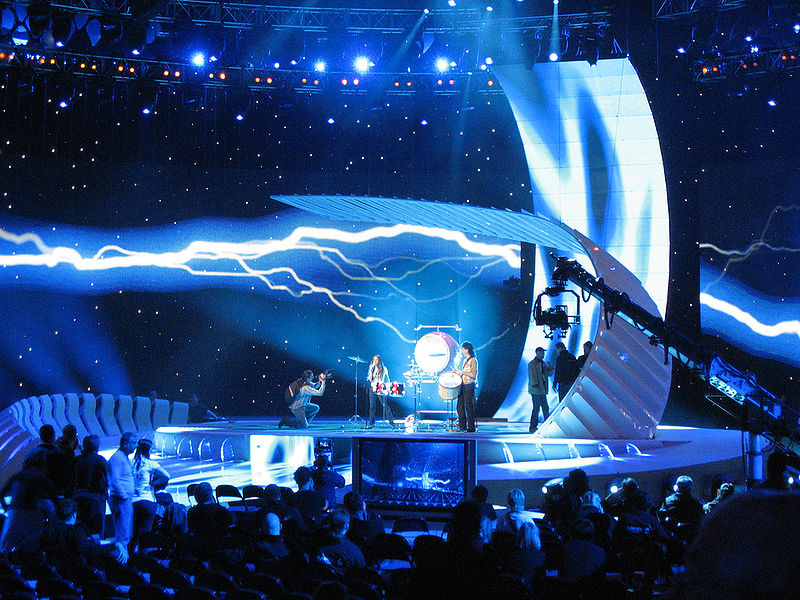
That said, Eurovision fame can last for years inside the fan bubble. Winners come back as interval acts, former contestants turn into national treasures, and some performers seem able to tour the circuit forever on the strength of one unforgettable three-minute performance. And yes, that is Loreen in the photo. She did rather well out of it.