This article forms part of the OnEurope archive and was originally published on oneurope.co.uk. It has been permanently migrated to oneurope.net, the official home of OnEurope.
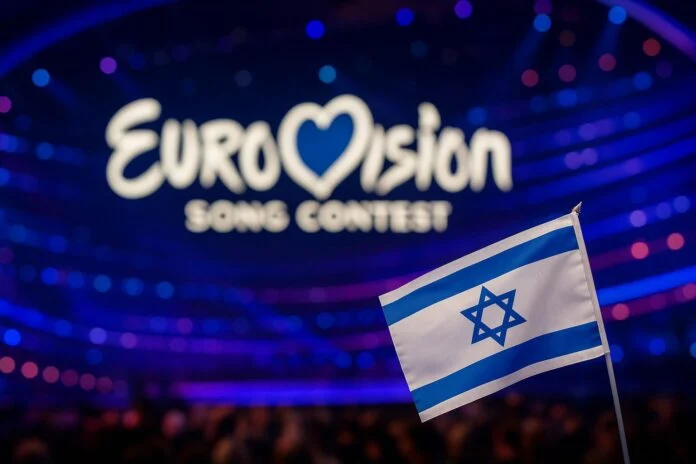
A coalition of more than 70 former Eurovision Song Contest participants signed an open letter, published by Artists for Palestine UK on 6 May 2025, urging the European Broadcasting Union (EBU) to exclude Israel and its national broadcaster, KAN, from the 2025 competition. The signatories accuse KAN of complicity in alleged Israeli actions in Gaza and use strong language, including allegations of “genocide”, “whitewashing” and “crimes against humanity”. These are claims made by the campaigners, not findings presented by the EBU or an independent investigation.
Signatories of the letter include notable Eurovision alumni such as Salvador Sobral (Portugal, 2017 winner), Charlie McGettigan (Ireland, 1994 winner), Daði Freyr (Iceland, 2021), Gåte (Norway, 2024), La Zarra (France, 2023), Mae Muller (UK, 2023) and Bianca Nicholas. The artists argue that allowing Israel to compete undermines the contest’s integrity and contradicts previous action taken by the EBU, such as the exclusion of Russia in 2022 following its invasion of Ukraine. That comparison is the campaigners’ argument about an alleged double standard; it is not an EBU finding that the two cases were legally or factually identical.
Unifying power
The letter states: “We believe in the unifying power of music, which is why we refuse to allow music to be used as a tool to whitewash crimes against humanity.” It further criticises the EBU’s handling of the 2024 contest, describing it as “the most politicised, chaotic, and unpleasant in the competition’s history.”
This call for exclusion added to the international debate over Israel’s participation in cultural events amid the war in Gaza and the wider conflict in the Middle East.
Irish voices
On 7 May, Irish broadcaster RTÉ added its voice to calls for the EBU to discuss the issue again. RTÉ Director-General Kevin Bakhurst said he was “appalled” by the events in the Middle East, including civilian suffering in Gaza and the fate of Israeli hostages. He said RTÉ had asked the EBU for a discussion about Israel’s inclusion, while also referring to political pressure on KAN and RTÉ’s obligations as an impartial public-service broadcaster.
That was a more limited position than an immediate call for a ban. The RTÉ NUJ sub-branch had voted on 6 May to ask RTÉ’s board to follow other European broadcasters in requesting Israel’s suspension, but the union branch’s position should not be confused with RTÉ’s official stance.
The EBU said before the contest that all its members were eligible to compete. It acknowledged “concerns and deeply held views” about the Middle East conflict and said it remained in contact with participating broadcasters, including Spain’s RTVE. Israel was scheduled to compete in Basel on 13, 15 and 17 May, represented by Yuval Raphael with “New Day Will Rise”. Israel was drawn in the second semi-final alongside Ireland.
RTÉ did not withdraw from Eurovision 2025. After a meeting with the EBU on 9 May, it said the EBU had committed to a wider discussion among its members “in due course”. So, on the eve of the contest, the pressure was real — but the ban had not materialised.
What happened next
In a later development, Israel did compete. Yuval Raphael qualified from the second semi-final and finished second in the 17 May final with 357 points, including 297 from the public vote and 60 from juries. Austria’s JJ won with 436 points. The EBU held a wider discussion in July 2025, describing the issue as unusually complex, noting differing views among members and saying that members expressed support for KAN’s independence while recognising pressure from the Israeli government.
For more information and to read the full letter, visit Artists for Palestine UK.