

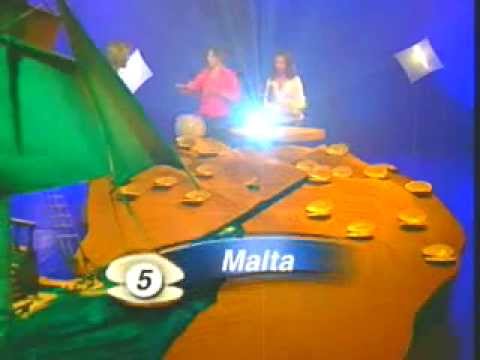
LTV, Latvian Television, has conducted the draw for the order of appearance in the 48th Eurovision Song Contest. The draw was conducted by Marie N and Reynard Kaupers, the presenters of the 2003 Eurovision Song Contest, in the presence of Sarah Yeun, the EBU‘s new live events co-ordinator.
The results of the draw are below:
- Iceland – RUV
- Austria – ORT
- Ireland – RTÉ
- Turkey – TRT
- Malta – PBS Malta
- Bosnia-Herzegovina – PBS
- Portugal – RTP
- Croatia – HRT
- Cyprus – PIK
- Germany – ARD/NDR
- Russia – ORTV1
- Spain – TVE
- Israel – IBA
- Netherlands – NOS
- United Kingdom – BBC
- Ukraine – NTU
- Greece – ERT
- Norway – NRK
- France – FTV3
- Poland – TVP
- Latvia – LTV
- Belgium – RTBF
- Estonia – ETV
- Romania – TVR
- Sweden – SVT
- Slovenia – RTVSlo
Many commentators believe that the draw has little or no effect, as the songs decide the contest, but statistically it is proven that certain draw positions have yielded better results than others. In the previous 47 contests, no country has won from 2nd, 4th or 16th position. 17th is deemed “lucky”, and in recent years songs that have been drawn in the second half of the draw have tended to do better than those in the upper portion.
In other developments, the rules for the 2003 contest have been released by the EBU. In a significant move, televoting (voting by telephone) has become mandatory for all countries, except in territories that have less than 80% telecommunications penetration. This rule allows nations such as Ukraine, Turkey, Bosnia and Herzegovina and possibly Russia (due to time zone differences) to keep the jury system.
In another major change, the rule governing the tie-break procedure has had a minor tweak. At present, if the scores are tied at the end of the voting procedure, the number of times 12 points have been awarded becomes the deciding factor, followed by 10 points, 8 points and so on down.
From 2003, if the scores are tied, the number of countries that have voted for each country will be the first deciding factor. If this is still equal, the present 12-points, 10-points and so on system is used. In another change, broadcasters are now obliged to show either the previews or a show detailing the performers and artists.