Romania has only just returned to Eurovision and already finds itself in the sort of argument the contest never quite knows how to handle neatly.
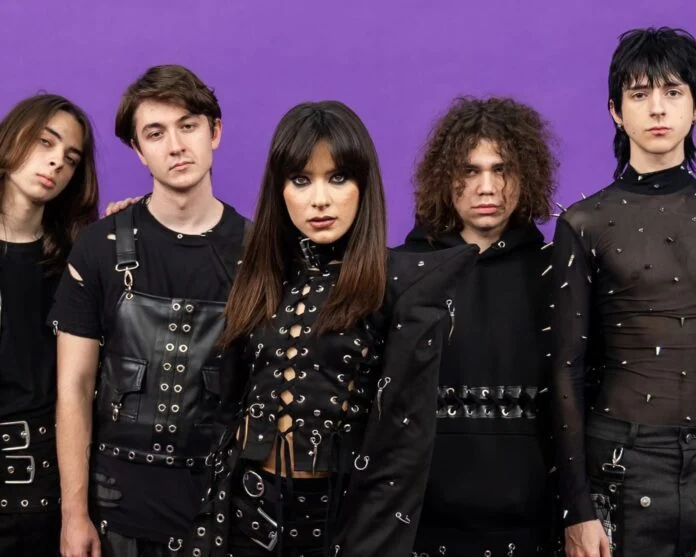
This year’s entry, Alexandra Căpitănescu’s Choke Me, won Selecția Națională on 4 March. Romania withdrew from the 2024 and 2025 contests, so this is its first Eurovision appearance since 2023. Căpitănescu, who won Vocea României in 2023, took the ticket ahead of 11 other acts.
The result was decided by a seven-member jury. Choke Me scored 82 points, ahead of HVNDS’ Dor on 69 and Bailando Solo by Alejandro Zandes & Emil Rengle on 66. Căpitănescu has been allocated to the first half of the second semi-final in Vienna on 14 May. That should have been the story. Instead, attention is on the song’s title and lyrics. Do they push Eurovision into territory the EBU may not want to defend in public?
On paper, the basics are straightforward. The song sits somewhere in the darker, heavier end of contemporary pop, with a nu-metal edge. TVR frames it as an intense, personal piece about emotional pressure, self-doubt and the feeling of being overwhelmed. Căpitănescu has likewise said that the imagery is metaphorical: emotional suffocation rather than literal violence or sexual activity.
Controversy
The problem is that Choke Me is a title that rather insists on being taken at face value. The phrase is repeated approximately 30 times during the three-minute song, alongside lines including “It’s hard to breathe in”, “I want you to choke me” and “make my lungs explode”.
Campaigners and commentators have criticised the song as appearing to glamorise or normalise sexual strangulation, arguing that the title, repeated phrase and wider imagery present a practice associated with serious health risks as something dangerous but desirable. There have been online and fan calls for the lyrics to be changed or the entry to be disqualified. That is not quite the same as saying that a formally recognised campaign organisation has lodged an official complaint, however.
Căpitănescu rejects that reading. She says the song is about emotional overwhelm, self-doubt and feeling psychologically suffocated, not about violence. TVR has publicly defended the entry too, saying that the Vienna staging will emphasise the metaphorical meaning and exclude any literal interpretation of the lyrics.
TVR delegation head Smaranda Vornicu said that the lyrics, video and wider stage-concept dossier had already been submitted to and accepted by the EBU and Eurovision organisers, with no request for changes at that point. The broadcaster has also appealed to artistic freedom and Eurovision’s stated values of diversity, inclusion, intercultural dialogue and authentic musical expression.
That is TVR’s account of the submitted material, rather than evidence that the EBU has investigated the criticism and formally approved the song after doing so. As of 18 March, there had been no public EBU statement specifically addressing Choke Me. The song’s video remained available through Eurovision channels, and The Guardian reported that the BBC had not lodged a complaint.
Last year’s Maltese storm in a kant pot showed why fans are speculating about possible intervention. A BBC complaint about Malta’s entry led to changes because the Maltese word sounded like an English profanity; the song was retitled Serving and the disputed word was removed. But the two controversies are not identical. Malta concerned perceived profanity and wordplay. Romania’s entry is being challenged over its alleged sexual-health and sexual-violence implications.
So far, there is no sign of a Romanian removal, rewrite or EBU ban. There is simply a song with an intentionally provocative title, critics who believe its imagery crosses a dangerous line, and an artist and broadcaster insisting that everyone is misunderstanding the metaphor. Eurovision, once again, has been handed a problem that will not fit neatly into a press release.