|
Getting your Trinity Audio player ready...
|
Confidential documents published today by Spanish outlet elDiario.es lay bare the tensions left behind by last year’s Eurovision Song Contest. They detail alleged breaches of the EBU’s rules by Israel’s broadcaster KAN, but also reveal an organisation increasingly worried about how Eurovision is governed, managed and perceived.
The warning to KAN
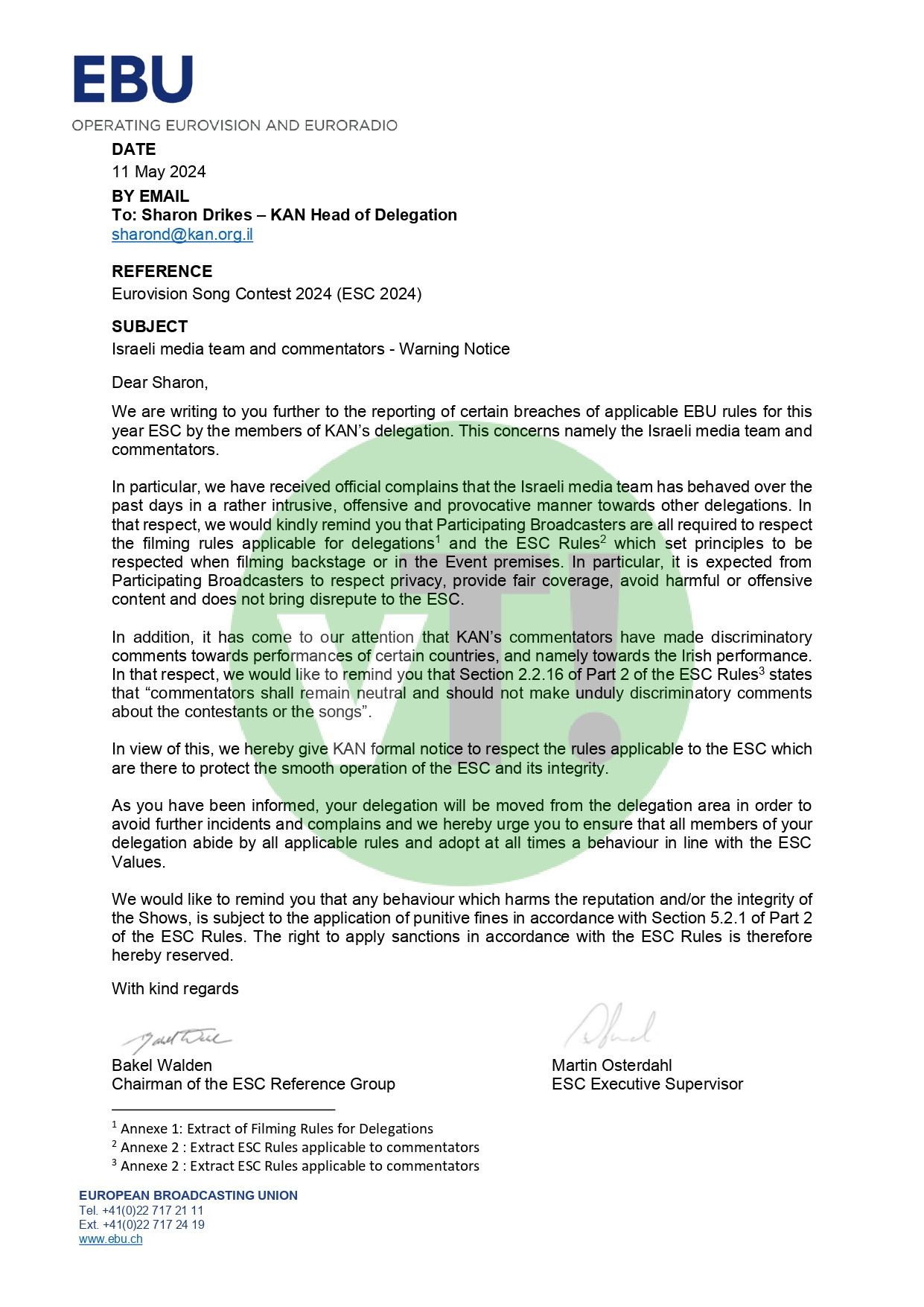
Following events in Malmö, the EBU sent KAN a stern warning. The letter, reproduced in the leaked documents, sets out concerns that Israeli delegation staff and commentators repeatedly breached Eurovision’s neutrality requirements.
The Israeli media team was accused of “intrusive, offensive and provocative” behaviour towards other delegations backstage. KAN commentators were also reported to have made discriminatory remarks about certain countries’ performances, with the Irish entry specifically identified as a target of alleged on-air bias.
The EBU’s position was unambiguous: commentary must remain neutral, and political, commercial or discriminatory remarks are not permitted. KAN’s delegation was consequently moved from the main delegation area, while the EBU reserved the right to impose fines and other sanctions.
The letter warned that this was not a matter to be quietly filed away. “Any behaviour which harms the reputation and/or the integrity of the Shows is subject to punitive fines…” it stated, adding that the right to apply sanctions was reserved.
Neutrality, rules and enforcement
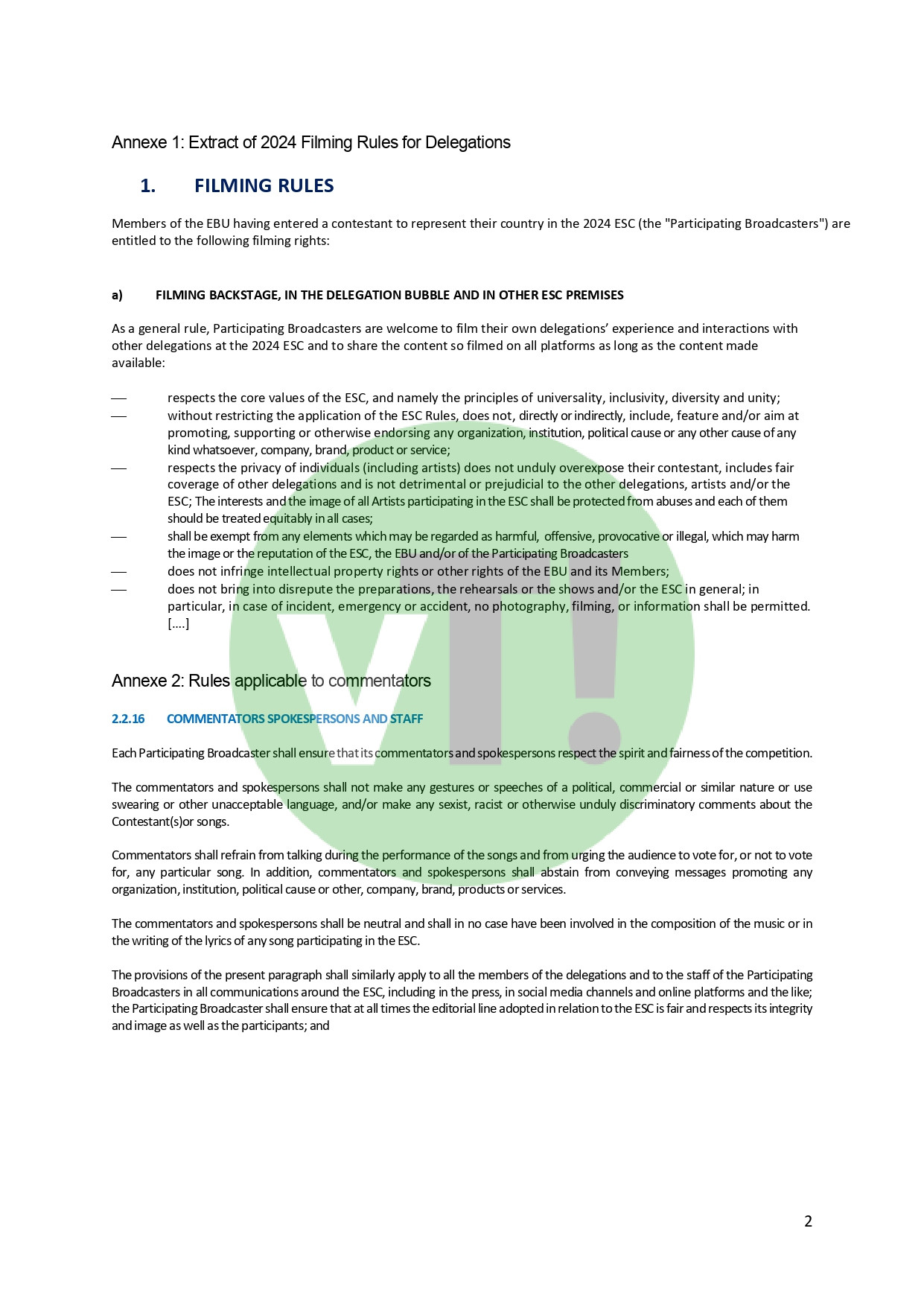
The documents provide a detailed reminder of what Eurovision expects from broadcasters. Backstage filming and digital content are allowed, but material must be respectful, must not politicise the contest and must not provoke or attack other participants.
Commentators must not urge viewers to vote, promote political causes or make sexist, racist or otherwise discriminatory remarks. The requirements apply not only to live broadcasts but also to official communications and the conduct of delegations.
That clarity on paper only highlights the contest’s continuing problem in practice. Eurovision presents itself as inclusive and fair while operating in a world where political tensions are impossible to keep entirely outside the arena. As this year showed, writing rules is considerably easier than enforcing them.
From internal review to a Eurovision Roadmap

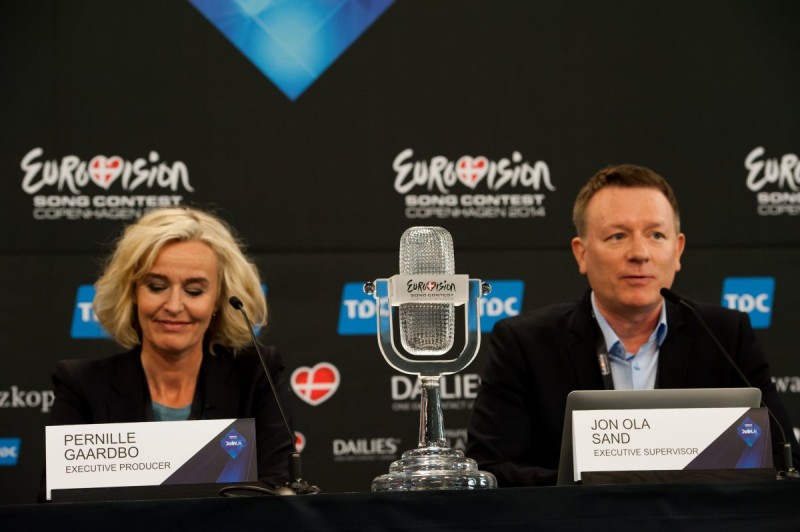
The leaked material also shows that the EBU has been conducting a much broader examination of itself. Pernille Gaardbo, formerly Eurovision’s Executive Producer, was asked to lead an independent review of how the contest is managed, governed and delivered.
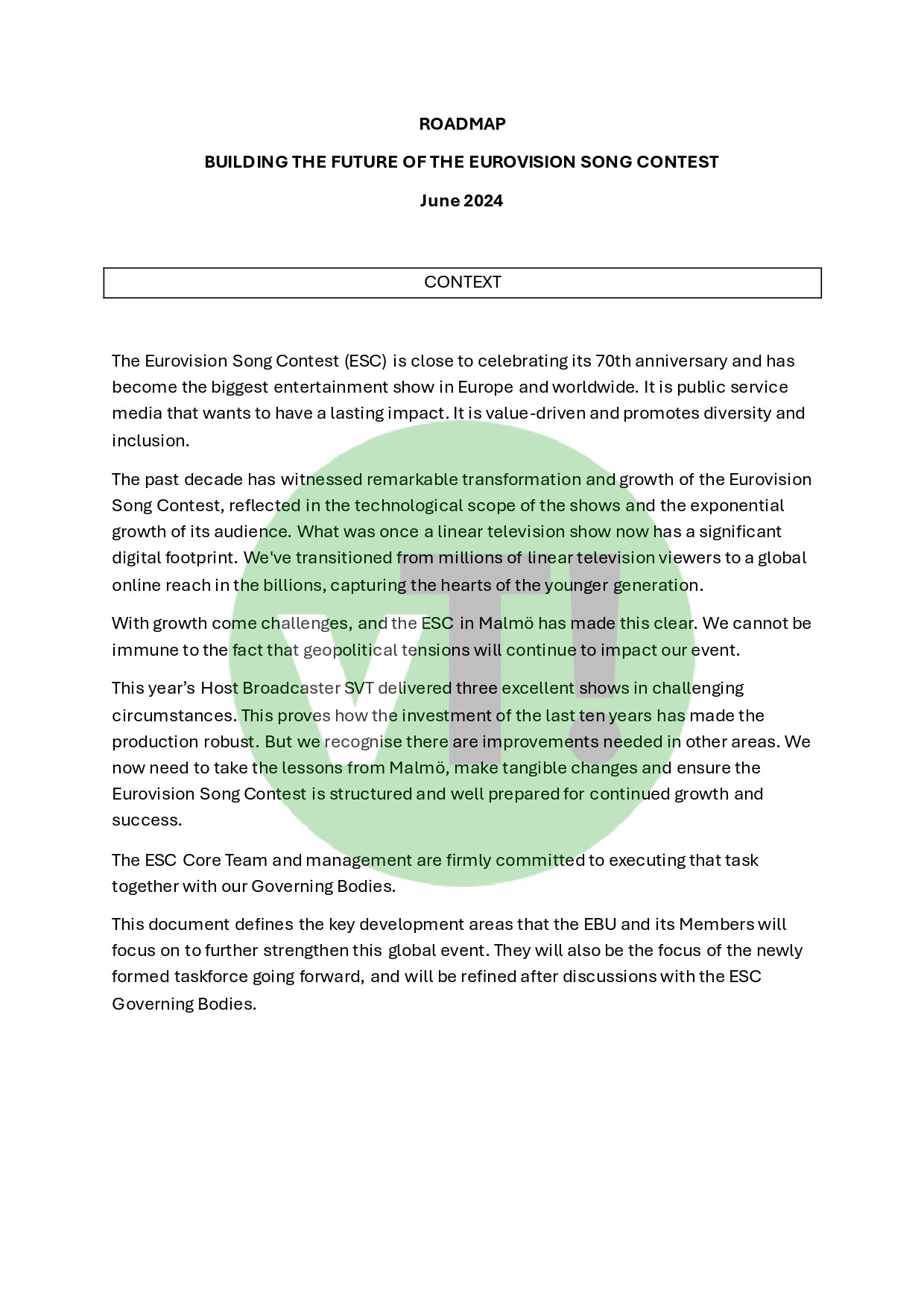
Her report was based on 53 interviews with key staff, the Reference Group and almost every head of delegation. It became the basis for a new Eurovision Roadmap, circulated to participating broadcasters.
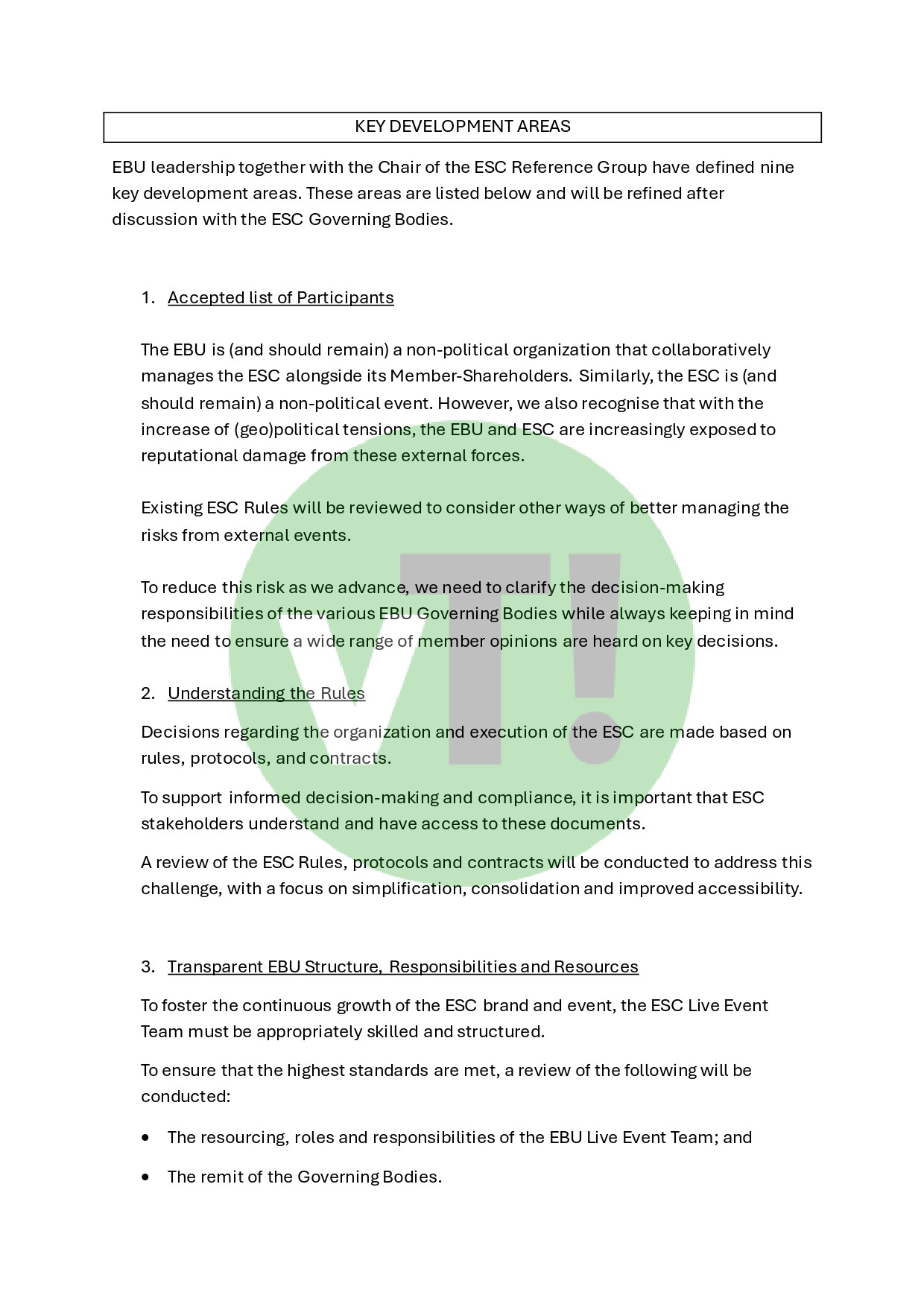
The report identifies nine areas requiring improvement. One is the creation of an accepted list of participants, intended to clarify who can take part while allowing political and reputational risks to be managed more explicitly.
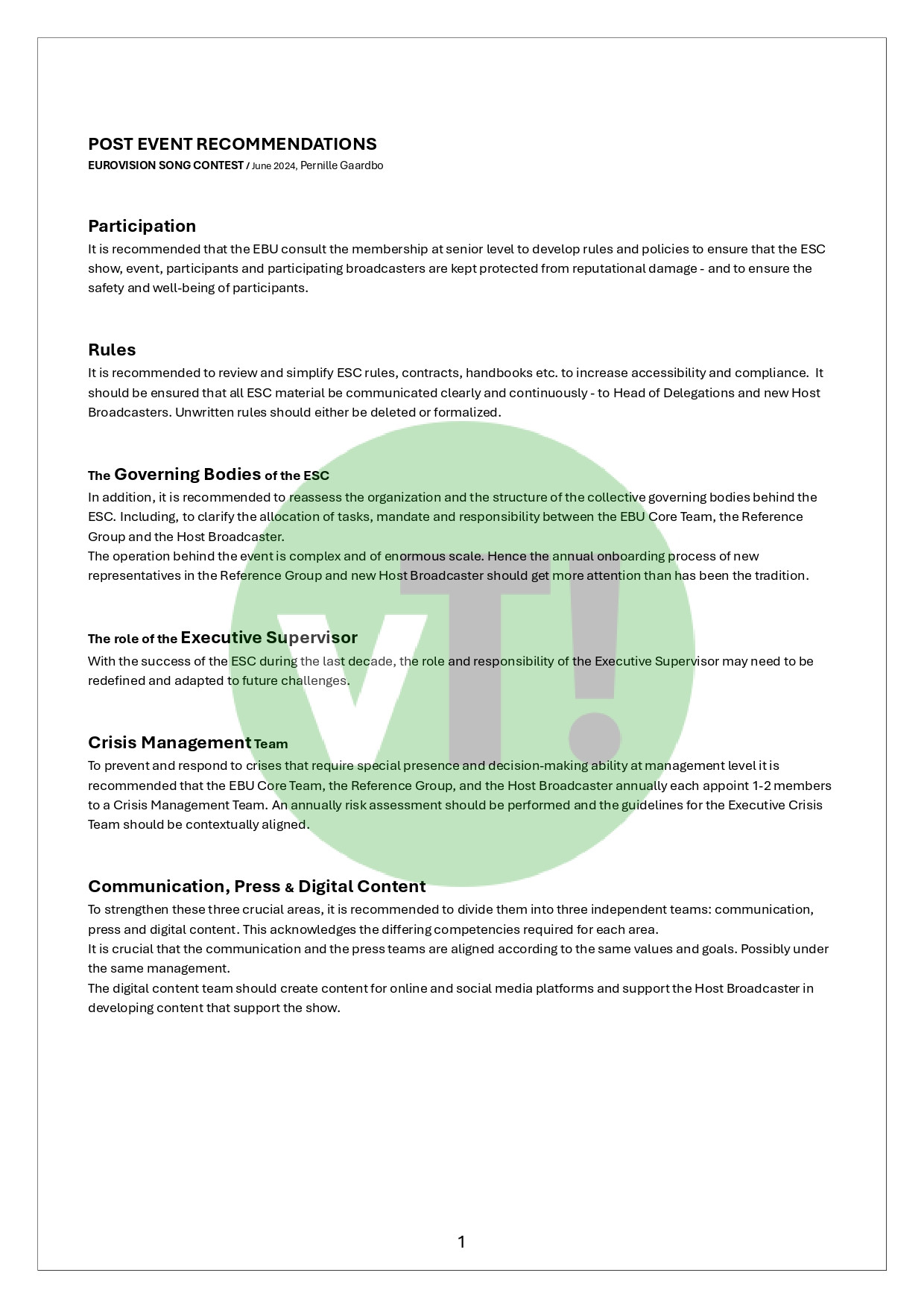
It also calls for rules, protocols and contracts to be reviewed and simplified, with clearer communication and stronger compliance. The resources and remit of the EBU Live Event Team and the contest’s governing bodies should be examined as well.
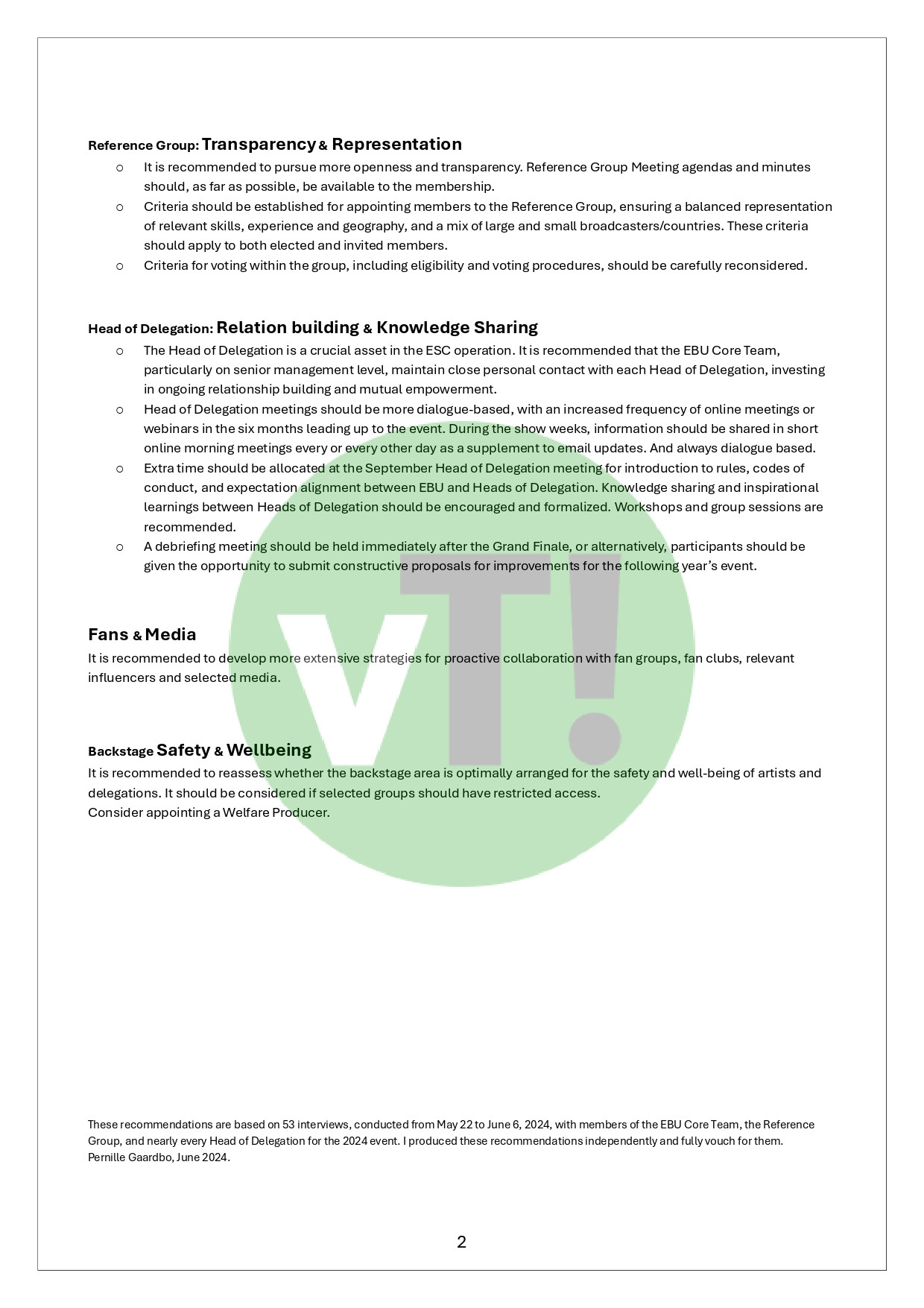
Governance and transparency feature heavily in the recommendations. The criteria for Reference Group membership and voting should be reviewed, while agendas and notes from meetings should be made available to members. Detailed debriefs should follow each grand final.
The roadmap proposes more proactive collaboration with fan groups, influencers and media, alongside a reassessment of backstage safety and welfare arrangements. One suggestion was the appointment of a Welfare Producer; that role was put in place for 2025.
Finally, Gaardbo recommended a cross-EBU and host broadcaster crisis team, annual risk assessments and clearer crisis guidelines. The plan also envisages better communication, teams divided by specialism, aligned messaging and more support for host broadcasters handling digital content.
A contest at the crossroads


The roadmap recognises how far Eurovision has expanded: from a television event watched by millions into a digital phenomenon reaching billions. That growth brings opportunities, but also more ways for the contest to be damaged.
Malmö demonstrated how geopolitical tensions can spill into the arena, how the promise of neutrality can be challenged and how trust can be weakened by perceptions of bias or mismanagement. The EBU leadership and the Reference Group are under pressure to act rather than simply paper over the cracks.
That means clearer rules, meaningful enforcement and more open communication with participants and fans. It also means accepting that the contest’s increasingly complicated backstage reality cannot be managed indefinitely through private warnings and diplomatic murmurs.
What is already changing?
Many of the recommendations are already being implemented. Contest rules and contracts are now subject to annual review, with accessibility and simplicity among the stated priorities. Formal onboarding has been introduced for new Reference Group and Host Broadcaster representatives, and organisers have agreed to publish more meeting agendas and decisions.
New measures have also been introduced to protect artists and delegations backstage, including roles dealing with welfare and reputational risk. Control over digital and press output has been tightened: fan sites and the public will receive less rehearsal footage, websites no longer have online or in-venue access to the early rehearsals, and photographs are not permitted at formal final run-throughs.
Performers are promised greater privacy during rehearsals, with camera-free zones available throughout the week.
And for delegations that do step out of line, the message is now intended to be unmistakable. Sanctions, fines and even removal from the delegation bubble are on the table.
For many Eurovision watchers, the documents confirm what has been building for some time. The spectacle and the language of unity remain, but the backstage politics and institutional fractures are increasingly difficult to ignore.
The EBU’s roadmap is ambitious. Whether it can restore trust, protect Eurovision’s reputation and keep the contest at the heart of European—and global—culture for the next seventy years remains unknown.
As these internal struggles become public, Eurovision’s next act will be watched more closely than ever.
And yes, these convenient leaks do give the impression of an organisation preparing the ground to make an “announcement”.