|
Getting your Trinity Audio player ready...
|
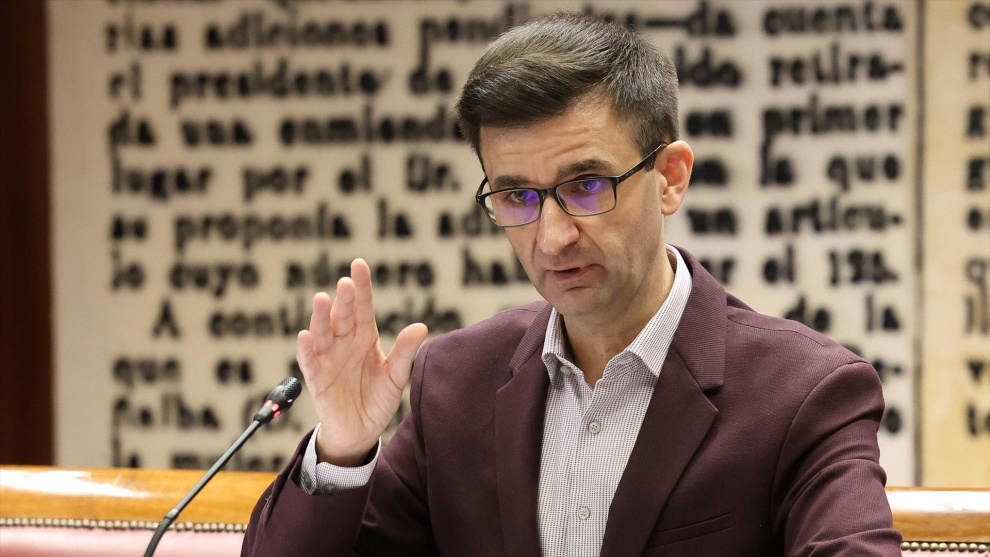
The President of Spanish broadcaster RTVE, José Pablo López, said he would raise Israel’s participation in the upcoming Eurovision Song Contest with the corporation’s Board of Directors.
Replying to a question from Spanish MP Francisco Sierra, a member of the left-wing SUMAR alliance, López said the matter would be discussed at the board’s next meeting, expected in March. He stressed that any position should be agreed by the board rather than presented as his personal decision. So, while the headline possibility was that RTVE might seek Israel’s disqualification from the European Broadcasting Union (EBU), there was no indication on 27 February 2025 that Spain had already made a formal request to the EBU.
Privatisation
López also pointed to the possible consequences of proposals affecting Israel’s public broadcaster, Kan. Kan was still an active EBU member in February 2025. However, proposals advanced by the Israeli government in late 2024 could privatise, radically restructure or close the broadcaster. The EBU warned that such changes threatened independent public-service broadcasting and Kan’s future membership; privatisation had not already taken place.
A completed privatisation or closure could therefore affect Kan’s eligibility for Eurovision, rather than representing an automatic “ban” already decided by the EBU.
López noted that, unlike in 2024, he was aware of no EBU member broadcaster that had formally requested Israel’s withdrawal from Eurovision 2025. That was his statement at the Spanish parliamentary hearing, rather than a definitive account of every internal or informal objection.
Israel was subject to calls to drop out of last year’s Eurovision Song Contest because of accusations relating to its military actions in Gaza. The EBU nevertheless allowed Kan to compete in 2024, saying its governing bodies had reviewed the matter and found the broadcaster eligible under the competition rules.
Slovenian broadcaster RTVSLO had raised concerns about Israel’s participation and the EBU’s handling of the 2024 contest. However, the available information at the time did not establish that it had made, and then withdrawn, a formal 2025 request for Kan’s exclusion.
What happened next
In April 2025, after this report was published, RTVE formally asked the EBU to debate Kan’s participation in Eurovision 2025. The EBU replied that Kan remained eligible. That later exchange confirmed that the board discussion mentioned by López developed into a wider public dispute, but it was not yet the position on 27 February 2025.</numerusform